Médicus Savard Québec
1350 Rue Cyrille-Duquet
Québec, Québec
G1N 2E5
Québec, Québec
G1N 2E5


Move freely, to maintain your active lifestyle
In order to meet a vast field of needs, Médicus offers a selection of orthotics adapted for the lower limbs (foot, ankle, leg, thigh). Articulated or not, rigid or flexible: it is the pathology and the treatment plans that will decide the type of orthosis to use. We treat sprained ankles, foot fractures, postoperative rehabilitation and much more. Our orthoses-prosthetists graduates will help you find a normal function and will accompany you with confidence.
Ankle orthotics and braces serve to limit excessive movements of the ankle. They also have a proprioceptive effect by providing better sensory feedback to the nerves around the ankle. The patient becomes more aware and gains more control.
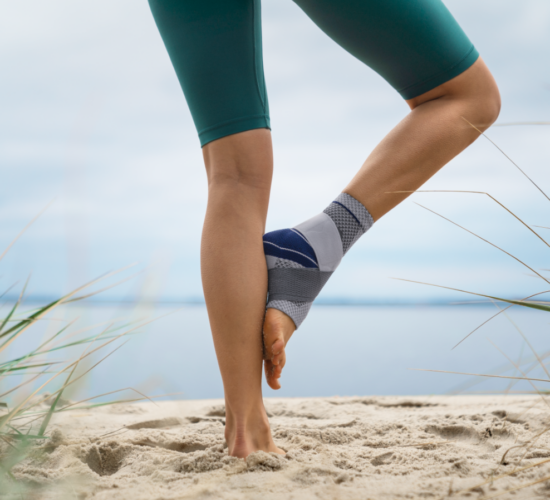
By stabilizing the ankle and foot, these orthoses treat several neuromuscular and musculoskeletal issues. A ankle foot orthosis makes it possible to stabilize the foot-ankle structure to allow for normal and safe movement.
An ankle foot orthosis is recommended in the following cases:
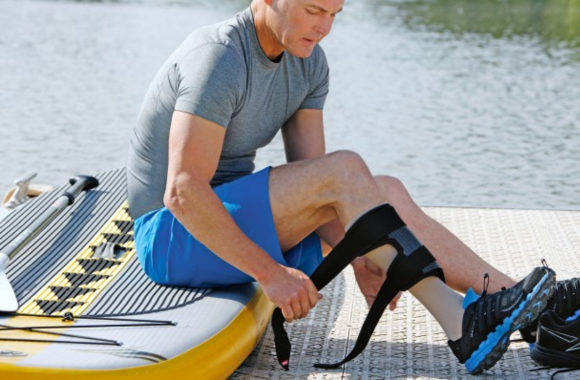
By stabilizing the foot, ankle and knee, the femoral-pedious orthosis alleviates several neuromuscular and musculoskeletal issues. A knee ankle foot orthosis makes it possible to stabilize the foot-ankle-knee complex to ensure a regular and safe gait.
A KAFO orthosis is recommended in the following cases:
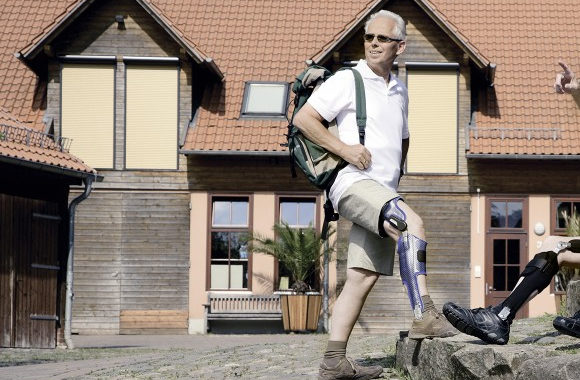
Lower-limb orthoses are designed to stabilize the foot, ankle, leg or thigh to help you walk and safely return to your activities. Articulated or non-articulated, rigid or flexible, they are used to treat ankle sprains, foot fractures, postoperative rehabilitation and several neuromuscular disorders. The condition and treatment plan determine the type of orthosis, as recommended by a Médicus orthotist.
An ankle-foot orthosis, also called an AFO, stabilizes the foot-ankle complex to support a more normalized and safer gait. It may be indicated in cases of foot drop, residual effects of a stroke, multiple sclerosis, posterior tibial tendon dysfunction or ankle instability. By maintaining foot alignment, it improves balance, reduces the risk of falls and makes everyday walking easier.
An ankle orthosis is designed to limit excessive movement and provide a proprioceptive effect, meaning improved sensory feedback that enhances awareness and control of the joint. This support is useful for sprains, instability or rehabilitation, helping you move more safely.
A walking boot immobilizes the foot in a position that supports healing while still allowing daily foot cleaning. It is used for injuries or fractures of the foot or ankle, often as an alternative to a traditional cast. Médicus offers, for example, the Aircast walking boot. When and how long it should be worn should be determined with your healthcare professional.
You do not need a prescription to consult a professional at a Médicus location. However, depending on the product recommended, a medical prescription may be required. Because an orthotist is not a physician, they do not provide a medical diagnosis. Booking an appointment is recommended so that you can receive an assessment and advice tailored to your condition. You can book an appointment online or contact our team by phone.
Find the nearest location