Médicus Savard Québec
1350 Rue Cyrille-Duquet
Québec, Québec
G1N 2E5
Québec, Québec
G1N 2E5
For increased support and comfortable and safe rehabilitation.
The orthopedic treatment of the upper body is very delicate because the vertebral area requires a lot of precautions. Médicus offers a range of specific products for this purpose such as cervical collar and lumbar corset. Our graduated orthotist-prosthetists will work diligently to provide you with the right product for your back and upper body pains.
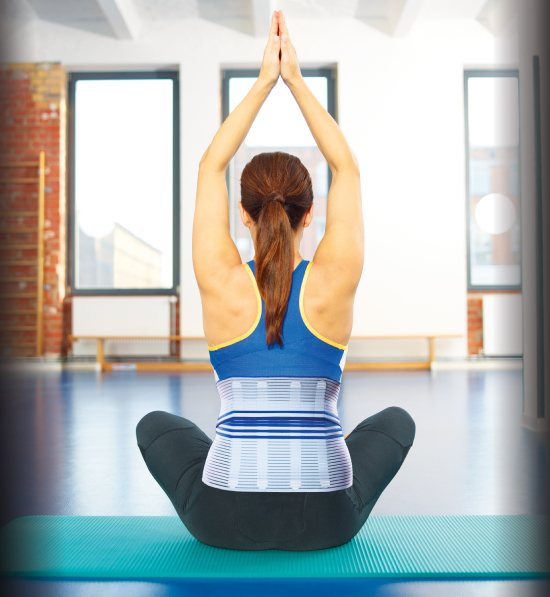
Médicus dorsal orthoses are designed to limit flexion and/or extension as well as lateral trunk movements, thereby improving stability of the spine. They are designed according to the restriction they exert on movement, as well as according to the comfort they provide. Their dynamic action offers the perfect balance between freedom of movement and the support needed for rehabilitation.
A lumbar orthosis is recommended in the following cases:
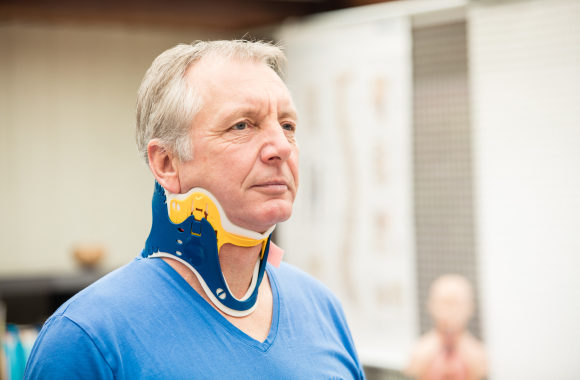
In the event of a fracture or other injury to the cervical vertebrae, sometimes just wearing a cervical orthosis alone does not provide enough support: an orthosis that will also immobilize the head becomes necessary. Médicus offers different types, such as Halo and Minerve that can be tailored to the needs of your treatment.
A neck or cervical orthosis is recommended in the following cases:
Certain signs may indicate that a child could benefit from foot orthotics: walking with the feet turned inward, flat feet or high arches, poor alignment of the knees or ankles, frequent falls, difficulty running as fast as other children or early fatigue during physical activity. If you notice these signs, an assessment by a Médicus orthotist can determine whether foot orthotics are indicated.
There is no fixed age: foot orthotics may be considered as soon as a posture or gait issue is detected, sometimes around age 3 or 4. Before age 3, a child’s foot is still very flexible and the arch has not yet formed, which is normal. Pediatric orthotics are designed to respect stages of growth and gradually guide the feet.
A cranial orthosis is a padded plastic helmet, made from a mold of the child’s head, that helps reshape the skull by applying gentle pressure to specific areas. It is used to treat positional cranial deformities.
A pediatric lower-leg and foot orthosis stabilizes a child’s ankle and foot while allowing the child to make full contact with the ground, which promotes the development of a smooth gait without restricting healthy movement. It is particularly indicated for conditions such as clubfoot, muscular dystrophy, mild spasticity, neuromuscular disorders, or post-traumatic fractures. A prosthetist and orthotist assesses the child’s evolving needs to adjust the orthosis.
No prescription is required to consult a professional at a Médicus location, but depending on the recommended product, a doctor’s prescription may be required. Since the orthotist is not a doctor, he or she does not make a diagnosis. It is recommended that you make an appointment for an evaluation tailored to the child’s age and condition; you can book online or contact the team by phone.
Find the nearest location